Career
Mason
Field & Trades
Builds with brick, block, and stone, work that's visible on the finished building in a way most structural trades aren't.
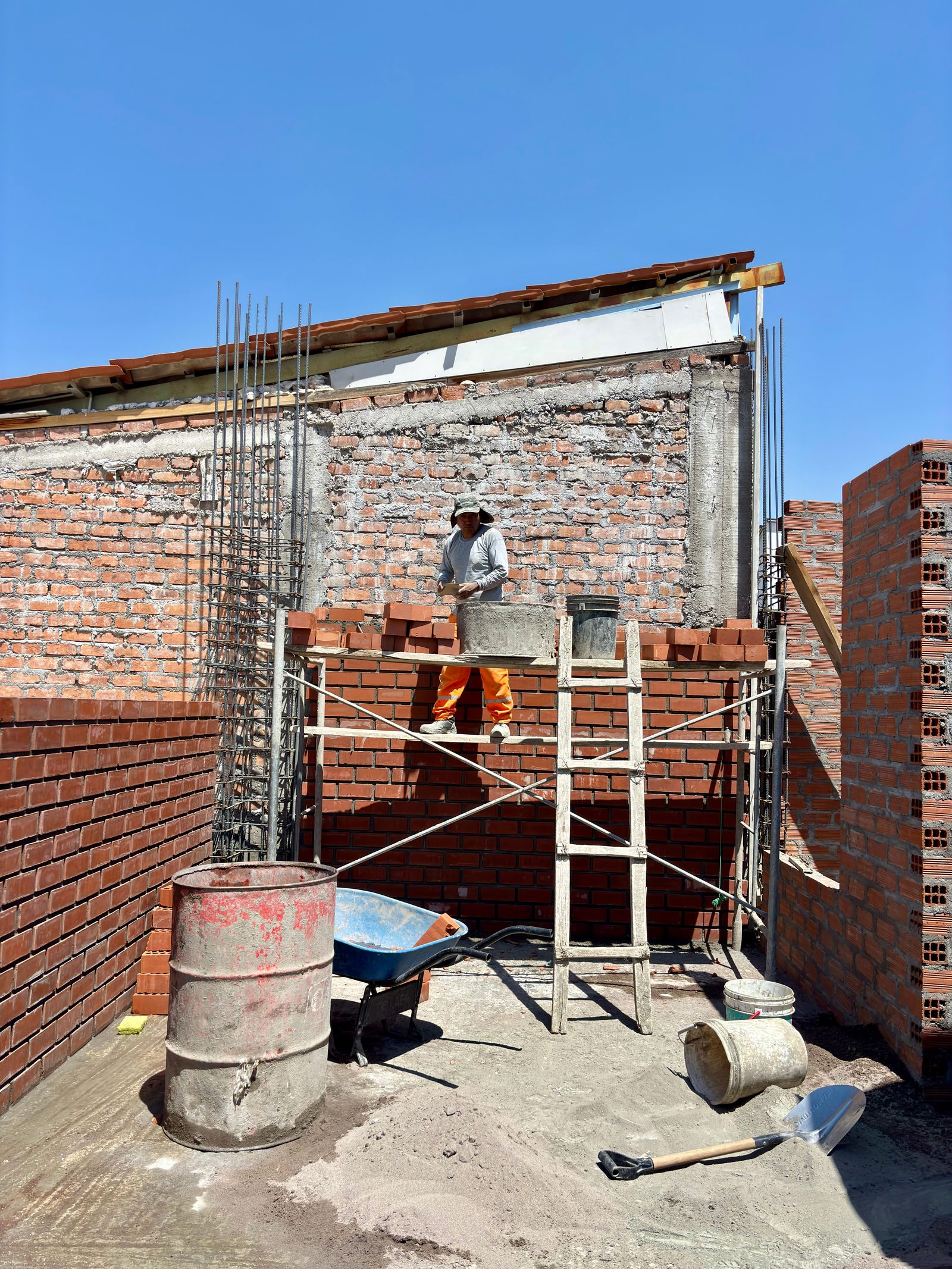
What is a Mason?
A Mason builds and repairs structures using brick, concrete masonry units (CMU), stone, and mortar, exterior brick veneer, structural CMU walls, and decorative stonework. Unlike electrical or plumbing work, masonry generally isn't a separately state-licensed trade in most places, so the path into it runs through apprenticeship and on-the-job skill-building rather than a licensing exam.
What they do
- Lay brick, block, and stone according to drawings and specifications
- Mix and apply mortar, matching the correct type and ratio for the material and application
- Read drawings and details to plan coursing, bond patterns, and control joint locations
- Build and remove scaffolding as work progresses up a wall
- Cut and fit masonry units around openings, corners, and other details
- Tuckpoint and repair existing masonry as part of restoration work
A typical day
- 6:30 AMReview the day's wall section and check mortar and material staging
- 7:00 AMLay brick veneer on the level currently under construction
- 10:30 AMCut and fit brick around a window opening per the detail drawings
- 1:00 PMBuild scaffolding to reach the next lift of the wall
- 3:30 PMClean tools and protect the day's completed work before weather exposure
Skills
Reading drawings and masonry detailsPrecise, consistent bricklaying and coursingMortar mixing and applicationScaffolding setup and safe usePhysical stamina for repetitive, weight-bearing work
Software
none typically required for the trade itself
Education
- Required:
- High school diploma or equivalent, then a registered apprenticeship (typically 3-4 years of paid on-the-job training plus classroom hours), since masonry isn't a separately state-licensed trade in most places the way electrical or plumbing work is
- Helpful:
- OSHA 10 or 30 certification (not a nationwide legal requirement, though several states, including New York, Massachusetts, Connecticut, Nevada, Missouri, and Rhode Island, legally require it for workers on public construction projects) and scaffold-specific safety training
- Not necessary:
- A four-year college degree, since the apprenticeship-to-journeyman route is the standard path
Career progression
- 1.Apprentice Mason
- 2.Journeyman Mason
- 3.Mason Foreman
- 4.Masonry Contractor (running your own crew/business)
Who hires for this role
Masonry SubcontractorsGeneral Contractors (on projects that self-perform masonry work)Restoration Contractors (tuckpointing and historic masonry repair)
Explore next
ConstructionGeneral ContractorCMU (Concrete Masonry Unit)Brick VeneerMortarMasonry Control JointSilica Exposure StandardSuperintendentOSHA 10-Hour ConstructionNCCER Core CurriculumConstruction Interview Basics: What to ExpectConcrete Worker (Cement Mason / Finisher)Field & Trades Interview GuideHistoric Preservation SpecialistStone VeneerMasonry Flashing & WeepsMasonry Reinforcement, Ties & Anchors